
As someone who recently completed her PhD, I believe I am well-equipped to advise current or soon-to-be PhD students. First, let me congratulate you on embarking on this remarkable journey. I describe it as remarkable because this milestone marks the beginning of your career, regardless of whether you choose to remain in academia or pursue other paths. As you advance in your career, the day you defended your PhD will always stand out in your memory. You might forget the day you defended your master’s thesis, but you will not forget your PhD defense. In this context, I would like to congratulate my mentor, Dr. Mariana Ribas Ribas, on her habilitation on the 26th of this month. She is truly an outstanding, inspiring individual. During her habilitation, she also mentioned that she celebrated the 14th anniversary of her PhD.
It has been six months since I defended mine, and my academic year has started counting. In academia, “counting the academic year” after completing a PhD typically refers to the formal recognition of the time following your doctoral defense as a part of your professional academic career. This period can mark the beginning of various milestones, such as time spent in a postdoctoral position, securing a faculty role, or engaging in research and teaching. For many, it serves as a significant transition period where you establish yourself within your field, build a publication record, network with other academics, and potentially apply for grants or academic positions. This timeline is often used when evaluating your professional development, teaching experience, and contribution to the academic community going forward. It highlights your progression from being a student to becoming a professional in your discipline. In short, it’s about recognizing the start of your contributions and experiences as a fully qualified Ph.D. holder in the academic world.
As I share my experiences and advice, I want to emphasize that I completed my PhD in just three years and two months. It’s doable! I’ve had mentors who accomplished their PhDs in similar timelines. However, I understand that some may have contracts spanning four to five years and feel more relaxed, thinking that time is on their side. Just remember, four or five years can fly by in the blink of an eye. Before you know it, you could find yourself racing against the clock, feeling the pressure as your contract nears its end. So, here’s my advice for you, current and soon-to-be PhD students:

Stay focused and make the most of your time: It’s easy to feel overwhelmed by the demands of research, writing, and teaching. However, keeping your long-term goals in mind can help you navigate these challenges. Create a clear plan, set achievable milestones, and celebrate your progress. While it’s normal to feel pressured at times and want to take a break to clear your head. This is also important to avoid burnout and re-energize yourself. However, going on unnecessary holidays can hinder your ability to achieve the goals you’ve set for yourself. It’s important to note that not all PhD students experience the same pressures or adhere to the exact timelines; some may thrive under longer deadlines and take holidays several times away from their school work. This is perfectly acceptable as long as it allows you to meet your goals within the designated timeframe.
Seek Support: When I began my PhD in 2021, I often found myself staring at my computer, consumed by thoughts about my next steps. After conceptualizing my research idea, I understood the importance of mapping my path forward. While I had always received support from my supervisors, I was unaware of how much more I could benefit from being open with them. Two months into my PhD journey, I realized, “Adenike, you have support; don’t work in isolation.” I wrote this affirmation down and placed it where I could see it daily as a constant reminder to embrace all opportunities and not limit myself. I’m grateful that this shift in mindset worked for me.

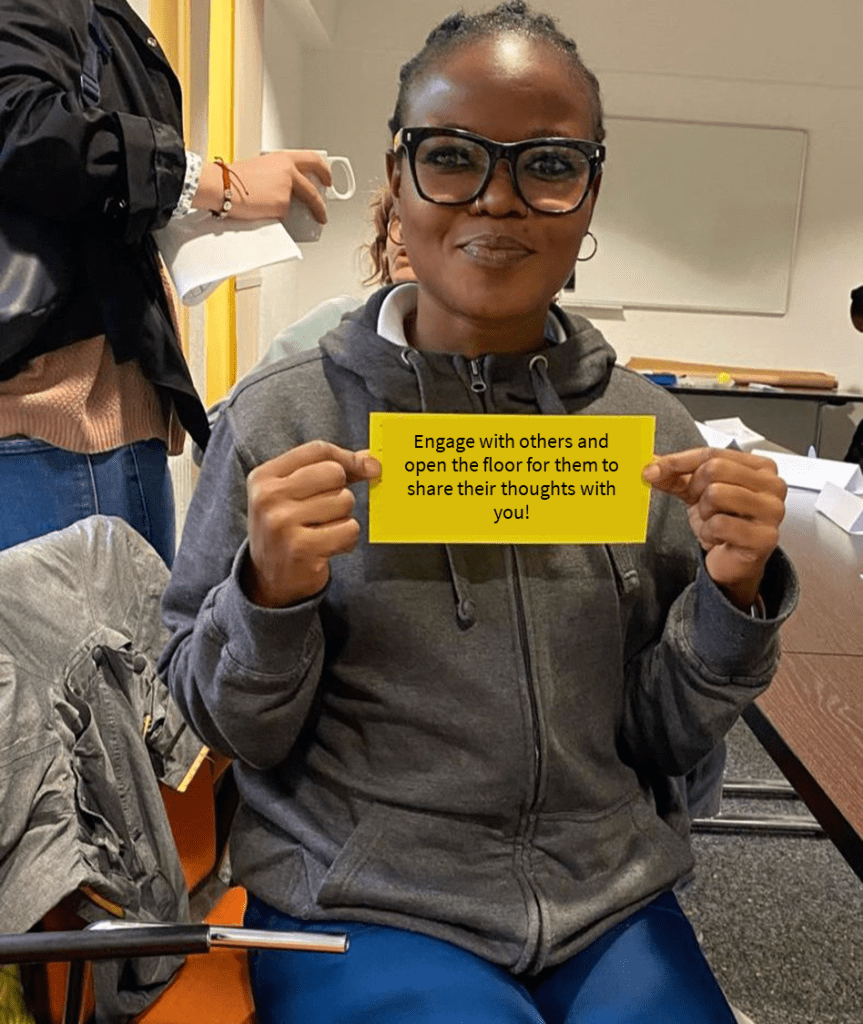
A PhD journey, while rewarding, can also be incredibly demanding, so don’t hesitate to seek support when needed. Building a network of peers, mentors, and collaborators can make all the difference. Your advisors and committee members are there to guide you—not just with research but also with professional development. Regularly communicate with them, ask questions, and seek their feedback. Beyond academic relationships, lean on your friends, family, and fellow PhD candidates. They can offer encouragement, a fresh perspective, or simply a listening ear on tough days. Remember, seeking support isn’t a sign of weakness; it’s a strategy for success. Surrounding yourself with a strong support system can help you stay motivated, manage stress, and make the journey more fulfilling.
Be in the moment: As mentioned earlier, many people feel apprehensive about what comes next after completing their PhD. I have a good friend who once told me he wouldn’t finish his PhD until he was certain of his next steps. While I completely understand his perspective, especially as an international student like myself (the next step is often more challenging for international students), I believe that overthinking your post-PhD plans may detract from focusing on this significant achievement. This can hinder your ability to write and complete your thesis on time, especially when job applications can require you to apply to at least five positions daily, or so I’ve been told. For each one, crafting and submitting a quality application can take two hours or more. If you’re writing five applications a day, that accounts for ten hours of the valuable time you should be devoting to your thesis. I am not saying that applying for jobs is wrong or that you shouldn’t do it. I am simply suggesting that you take one step at a time. Why not focus on finishing your thesis, submitting it for review, and then concentrating on your job applications? The reality is that when we become too preoccupied with tomorrow, our present may be affected. Stay in the moment, focus on one task at a time, and you’ll be amazed at what opportunities tomorrow may hold.
Lastly, remember that your wellness is as essential as your academic success. The path to completing a PhD can be unpredictable. Embrace flexibility and be open to adjusting your plans as needed. Adaptability will serve you well in both your PhD journey and future endeavors, whether it’s adapting your research focus or exploring unexpected career opportunities. In summary, embarking on a PhD journey is a remarkable experience filled with challenges and opportunities for growth. Keep your goals in sight, manage your time wisely, seek support and nurture your relationships, and be in the moment as you navigate this path. Above all, enjoy the ride, take care of your mental health and well-being, celebrate your achievements, and remember that every step you take brings you closer to your dreams. Best of luck on your journey ahead! You’ve got this!
 Everything Health and Education