
I applied for a science communication workshop advertised by the University of Saarland. I had even forgotten about it when an email arrived a month later informing me that I had been selected for the workshop, with a hotel reservation and meals covered. At first, I could not remember applying for such a workshop, but then I remembered applying for it a while ago. Oh, I am so busy now that I can’t make it there. Besides, I received an email two days after applying saying my profile didn’t match what they were looking for. The email said I should contact them if they had assumed wrongly, but I never did. I thought to myself, “It’s fine, I am busy anyway. So what changed? Hmmm. Also, the workshop is all the way in the far south, and I am in the North. It would take me a day to get there, so I am not really up for it. But wait, who is organizing the event? Oh, it’s Fulbright Germany. That sounds very appealing; everyone knows Fulbright is prestigious. I also hope to win the Fulbright in the future for my projects. Why not? If they selected me for this workshop, I must take advantage of it.

And so, I started looking forward to the event, and gradually, the day came. Voila, I was in Saarbrücken, a beautiful city in southwestern Germany, about 8 hours away from Oldenburg, even with the intercity train. Of course, not only was the event’s organizer essential, but the topic of science communication was also critical and discussed daily, particularly in the Western world. I hope the Global South will take it seriously soon, as their unique perspectives and challenges can enrich the global discourse on science communication. But wait, what exactly is science communication, and why is it imperative? Many people from different parts of Germany, and even some from the US, were there. Why did they have to leave their busy schedules to come for such an event? What is the take-home message? Now, regarding the science communication event organized by Fulbright, how was it? I will discuss all of these in this blog, so sit back and read it to the end. I, however, promise to take only a little of your time.

Science communication refers to conveying scientific ideas and research to the general public. It aims to bridge the gap between the scientific community and society, ensuring that people without a scientific background can understand the implications of research and its relevance to their daily lives. It is how scientists talk about their research to non-experts or non-scientific audiences. As a scientist, it is essential to communicate your work to people outside your field and show that it is relevant to society.
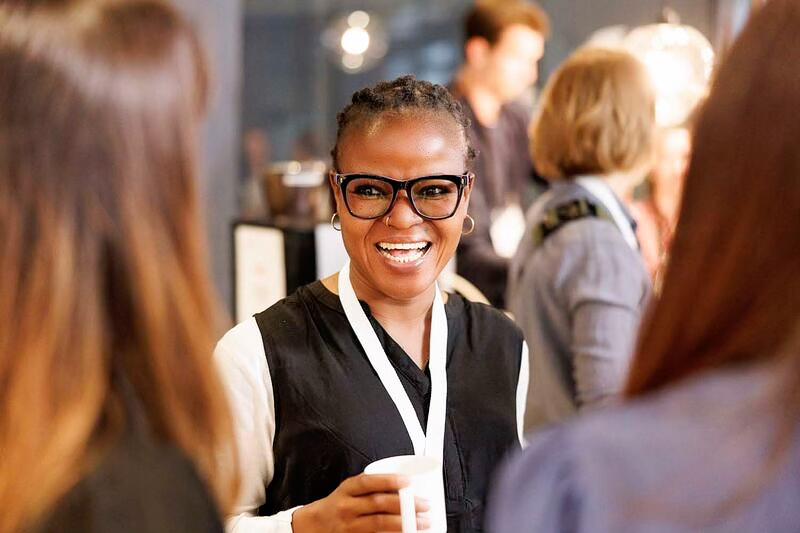
Apart from communicating with people face to face, scientists are utilizing diverse platforms to communicate their work to the public, including social media platforms such as X, YouTube, and Instagram, as well as podcasts and blogs. These mediums provide opportunities to explore scientific topics and facilitate interactive discussions. Science communication is not to gain public recognition but to educate the public to promote knowledge sharing and reduce misinformation. For instance, public engagement activities such as citizen science projects promote direct interaction between scientists and non-experts. Today, scientists communicate their findings using such techniques as storytelling, visuals (like infographics), podcasts, and simplified language to ensure that their work resonates with non-specialists, fostering greater trust in science and encouraging evidence-based decision-making. Furthermore, science communication is not just a tool for education but can be used to improve public engagement and influence policy. No wonder many people attended the event, and I was excited to be a part of it.

The science communication event attracted participants from different parts of Germany and some from the United States. Why did they leave their busy schedules to attend such an event? The answer lies in the growing recognition of the importance of science communication in today’s world. Academics see it as crucial to making their work accessible and impactful. Participants wanted to learn new techniques and exchange ideas about engaging with the public better. Science communication isn’t only about being an expert in your field but also about how well you can articulate your findings and the broader significance of your work. Such events also serve as networking opportunities where like-minded individuals can share best practices and inspire others to improve their outreach efforts. The Fulbright is known to allow for knowledge exchange among researchers worldwide.

Now, let’s talk about the science communication event organized by Fulbright. It was a well-structured event that combined theoretical insights at the start of the workshop with practical exercises towards the end. Every session was designed to equip attendees with the skills to engage the public effectively. The event balanced a focus on key communication techniques like storytelling, visuals, infographics, and social media use, with opportunities for participants to implement some of these techniques. For instance, we were encouraged to do an Airplane pitch by introducing ourselves to our colleagues professionally and then talking about our research within one minute, assuming we met them on the plane. This is also known as the famous elevator pitch, where you briefly talk about yourself to someone within 30 seconds with the intent of making a connection with them, not forgetting points that are peculiar and important to you. We were advised to switch partners and discuss the same idea during this exercise. I struggled to communicate concisely on my first attempt but improved on my second and third attempts.

My take-home message was that the Fulbright-organized science communication workshop in Saarbrücken was an excellent experience. The facilitators provided valuable insights and practical tips on effectively communicating complex scientific concepts to diverse audiences. I also learned new techniques that I can use to engage my students. Guess what? I used one of the techniques during the first class I taught, and it was really nice. I also got a bonus experience because an award ceremony was held during which two great scientists were given the Fulbright Cottrell 2024 awards, and I was lucky to be present at the event. The two awardees also articulated their prospective research in ways everyone could understand. Overall, the workshop reinforced the importance of clear and engaging scientific communication. Whether you’re a seasoned researcher or a student, learning how to communicate your work effectively is essential for making a broader impact. Thank you for reading until the end. I hope I didn’t take so much of your time!

 Everything Health and Education