
Children are the hope and future of the universe. Nigeria has one of the largest populations in Africa, and a significant portion comprises children. The total number of children in Nigeria (defined as individuals under 18) is estimated to be around 100 million. According to the National Population Commission (2013), the rate of uneducated children especially in rural areas was high in 2013 as only 1.4% of them completed secondary education. More than 70 % were however enrolled in primary education as of 2018. While there has been progress in increasing access to education in Nigeria, there are still challenges to ensuring that all children have access to quality education because UNESCO estimated that 13.2 million children of primary school age and 10.5 million children of lower secondary school age are still out of school in Nigeria. These figures are high considering the impacts of illiteracy on our society today but what could be the contributing factors?
One of the major barriers to education in Nigeria is the stark socio-economic inequality. As a Nigerian, I can confidently say that inequality is as high as Mount Everest in the country. You can easily differentiate a poor Nigeria from a rich one in many aspects. For instance, only the children of rich families attend private schools, wear the best dress, live in good houses, have cars, have access to good health, and many more. Many families, especially in rural and low-income areas, struggle to afford the costs associated with schooling, including uniforms, textbooks, and transportation. This results in children being forced to work or help with household chores instead of attending school. Sometimes, the pressure is so high that these children are forced to drop out of school and focus on selling sachet water in the traffics or learning something else entirely. Some children do not even sell or learn, they just drop out of school and start roaming in the street.
Gender disparity is another factor contributing to the high number of uneducated children in Nigerian. Some cultures in Nigeria believe that sending the girl child to school is tantamount to a waste of money. Because the girl will eventually be married to someone else so there is no need of wasting the family’s money. Thus, early marriage is a serious issue, especially in the Northern part of the country as the girl child is given to marriage even before she reaches a marriageable age. This significantly reduces her chances of attending school. Sometimes, the girl child is given off to marriage to pay the parent’s debt. Perceptions about virginity preservation for marriage, promiscuity reduction, and sexual intercourse within a marriage context marriage in most cases lead to lower enrollment and higher dropout rates for girls compared to boys.
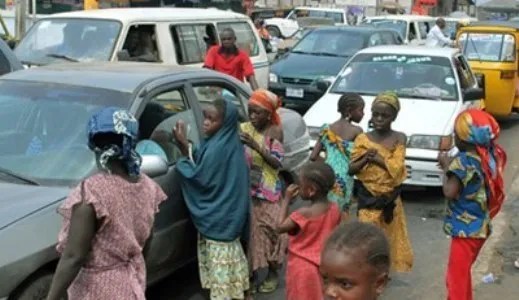
In regions affected by conflict and insecurity, access to education becomes even more challenging. Displaced families and damaged schools disrupt children’s access to consistent education, impacting their overall development. For this reason, a lot of families fled from their states to the Southwestern part of the country. The hardship experienced by these families is also reflected in their children as many of them cannot afford to send their children to school in Lagos. The government also does little to nothing in ensuring that these children are sent to school. Consequently, many children are seen with their family members roaming around or begging for money in the street of Lagos.
Inadequate school infrastructure is a significant challenge in Nigeria. Many schools lack proper classrooms, sanitation facilities, and clean drinking water. Many schools in Nigeria especially local or government schools also lack learning equipment. No libraries to facilitate good learning, no chairs, and no tables. Insufficient government funding for education leads to a lack of resources in schools. This includes outdated textbooks, inadequate teaching materials, and a lack of technology resources for modern learning. Children are forced to study inside dilapidated classrooms, with no laboratories to conduct simple experiments. In some cases, classes are conducted in overcrowded spaces affecting the overall learning environment. In addition, many teachers lack proper training and professional development, which affects their ability to deliver effective instruction. Lastly, Nigeria with over 200 languages presents challenges for children to learn. Studies are delivered in English which is the official language of the country. Many children especially those from a low socio-economic background do not have access to education in their native languages. This in addition to the inability to go to school can also make learning more difficult.
Children are the living messages we send to a time we will not see. – John F. Kennedy

 Everything Health and Education